

Whether it’s tsunamis, extreme rainfall, or earthquakes: natural disasters have tremendous destructive power. They are occurring with increasing frequency, and poor countries in particular suffer greatly as a result. People who find themselves in distress due to these disasters urgently need support. arche nova provides rapid emergency aid and supplies those affected with clean drinking water and food, for example.
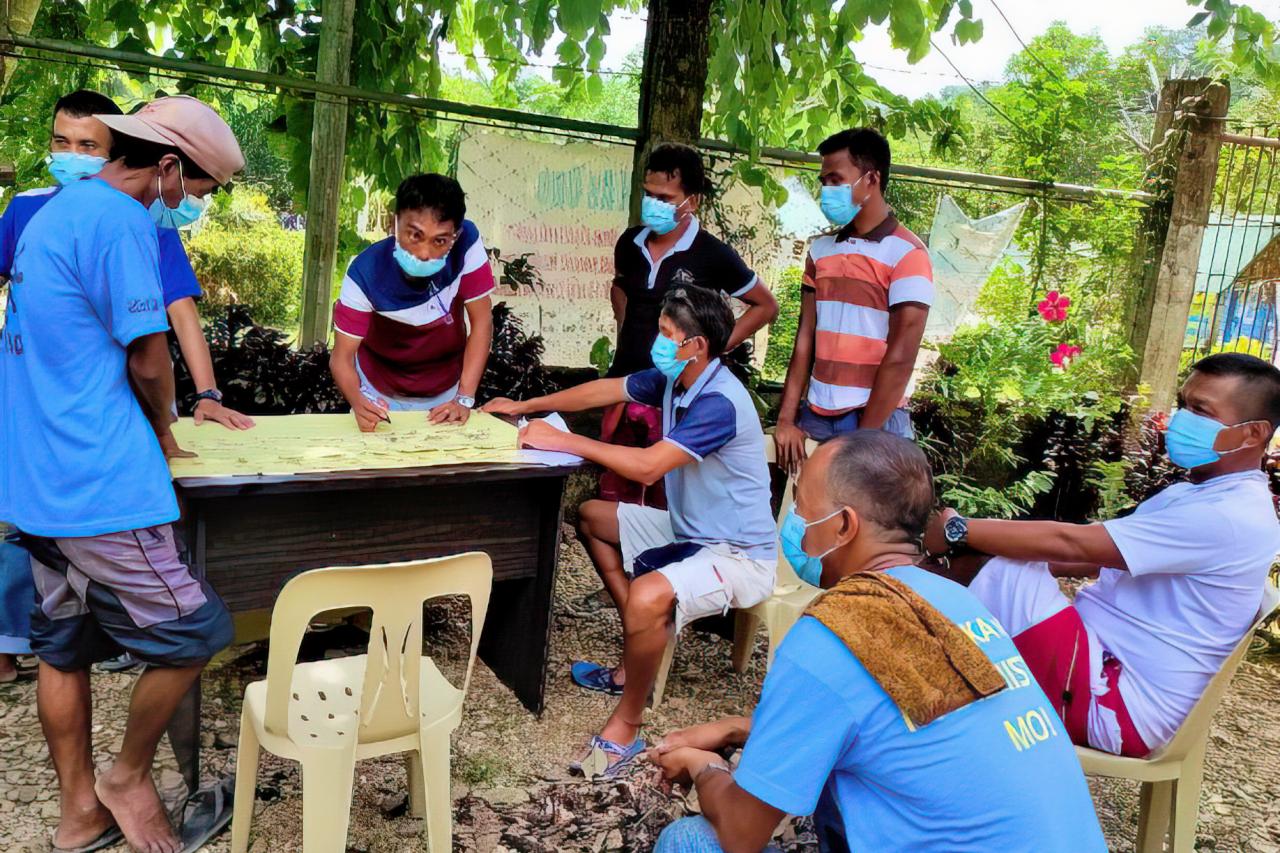
But after a disaster strikes, it is especially important to take preventive measures. We therefore work closely with local communities to prepare for emergencies. These measures range from building evacuation centers and establishing disaster committees to providing training and conducting emergency drills for the population.
It is particularly important to us to involve those affected from the very beginning, to utilize their skills, and to strengthen their self-reliance. In this way, the resilience of entire regions to natural disasters can be sustainably improved.
Part of the Alliance for Better Disaster Preparedness Worldwide
As a member of the Aktion Deutschland Hilft alliance, we support the current campaign for better disaster preparedness worldwide.
Information about the campaign at: www.aktion-deutschland-hilft.de
We are actively working to prevent drought disasters in East Africa by providing people in Ethiopia with brick-built rainwater storage tanks and filtration systems. We ensure that water does not flow unused during the rainy season in Kenya, but can be stored behind so-called sand dams.
We support a partner organization on the Philippine island of Mindanao in establishing sustainable disaster management. And in the structurally neglected rural regions of Ethiopia and Somalia, we ensure that COVID-19 aid for health centers reaches the weakest and most vulnerable members of the communities.

Effective disaster preparedness encompasses three key areas: risk analysis, prevention, and preparedness.
- Risk analysis: Analyzing existing hazards posed by natural events and assessing the vulnerability of the population
- Prevention: All measures intended to prevent or mitigate the consequences of disasters in the medium and long term
- Preparedness: Empowering people in high-risk areas so they can act and respond more quickly in the event of a disaster
Analyzing potential risks is the first step. Depending on the hazards identified, preventive and preparatory measures can be developed. This forms the basis for our projects focused on or incorporating disaster preparedness.