
Uganda
Topics
Parent Term: Our Main Focus: Water, Sanitation & Hygiene
Other Topics
Parent Term: Our Main Focus: Water, Sanitation & Hygiene
Parent Term: Our Main Focus: Water, Sanitation & Hygiene
Life between water and uncertainty
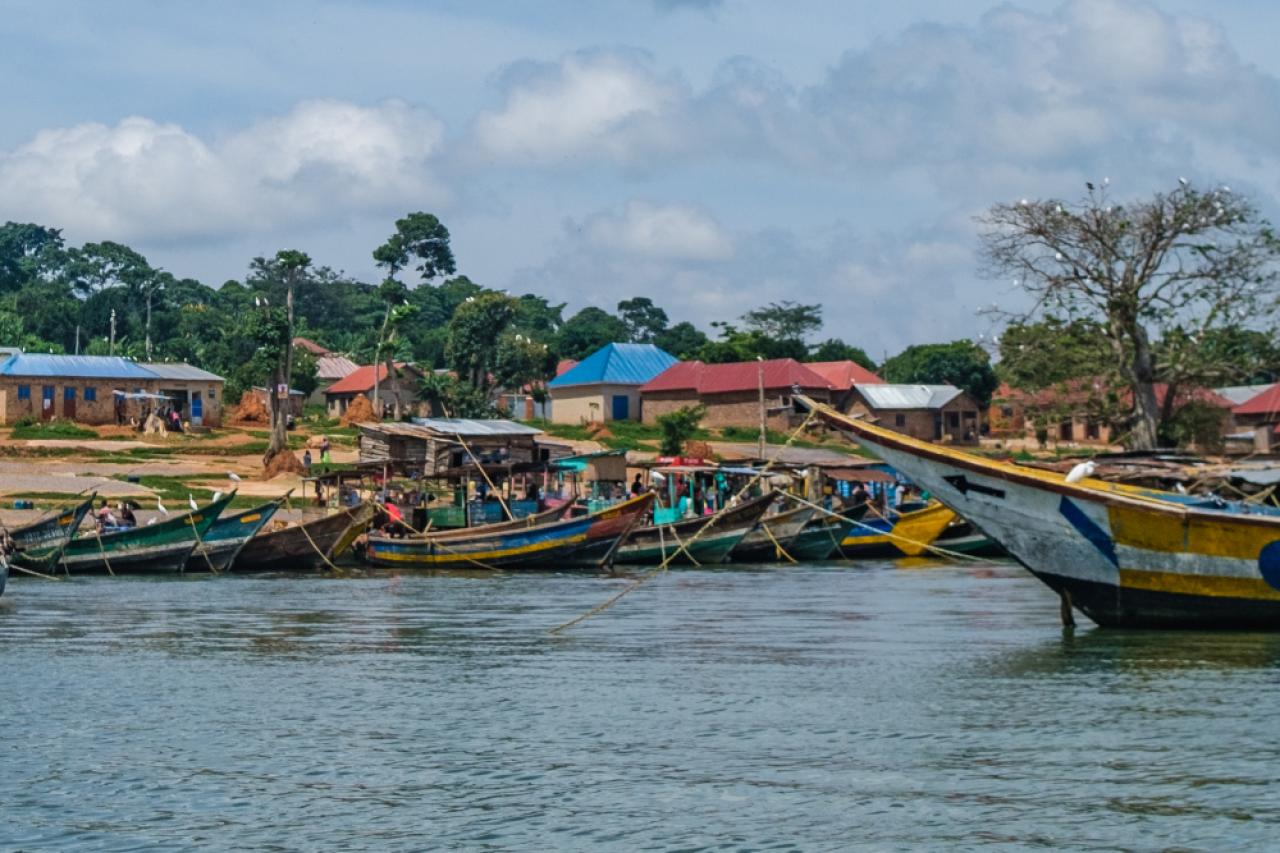
Along the shores of Lake Victoria in Uganda, fishing communities live in a paradoxical situation: they are surrounded by water, but clean drinking water remains scarce. In the scattered villages in the Mukono and Buvuma districts, people- especially women and girls - have to travel long distances or use polluted lake water. Sanitary facilities are largely lacking, and rubbish is often disposed of directly in the lake. The consequences are diseases such as bilharzia, diarrhoea and skin infections. At the same time, climate change, restrictive fishing laws and precarious living conditions threaten people's prospects. Women and children are particularly affected by poverty, violence and discrimination.
Water, rights and future prospects
The project operates on several levels. The focus is on three communities where new water supply systems are being built: a borehole in Katuba, an ultrafiltration plant for the island community of Katooke, which purifies lake water, and a spring water plant in Kitosi, which is being professionally expanded – a first for arche noVa. In addition, there are latrines, washrooms and waste incinerators. Local committees are being trained to look after and maintain the facilities.
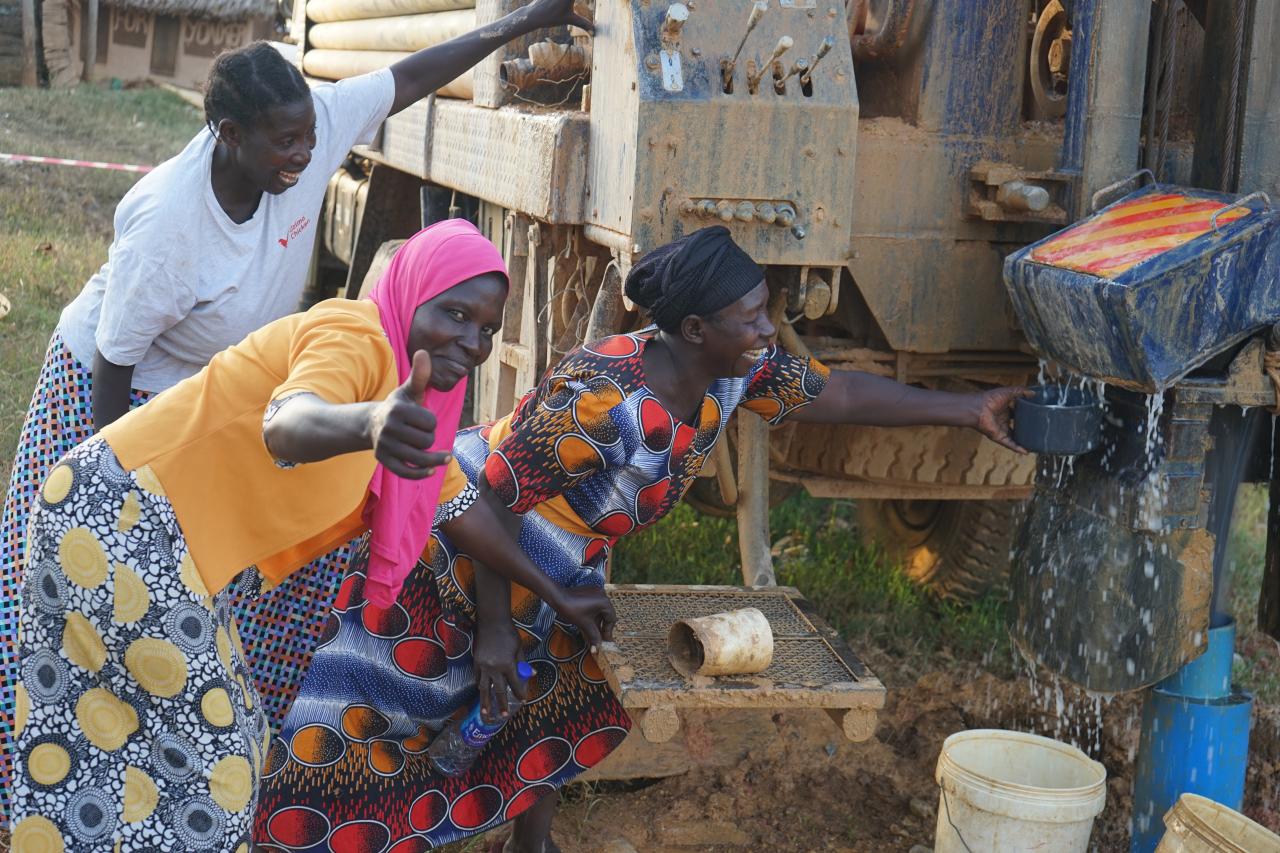
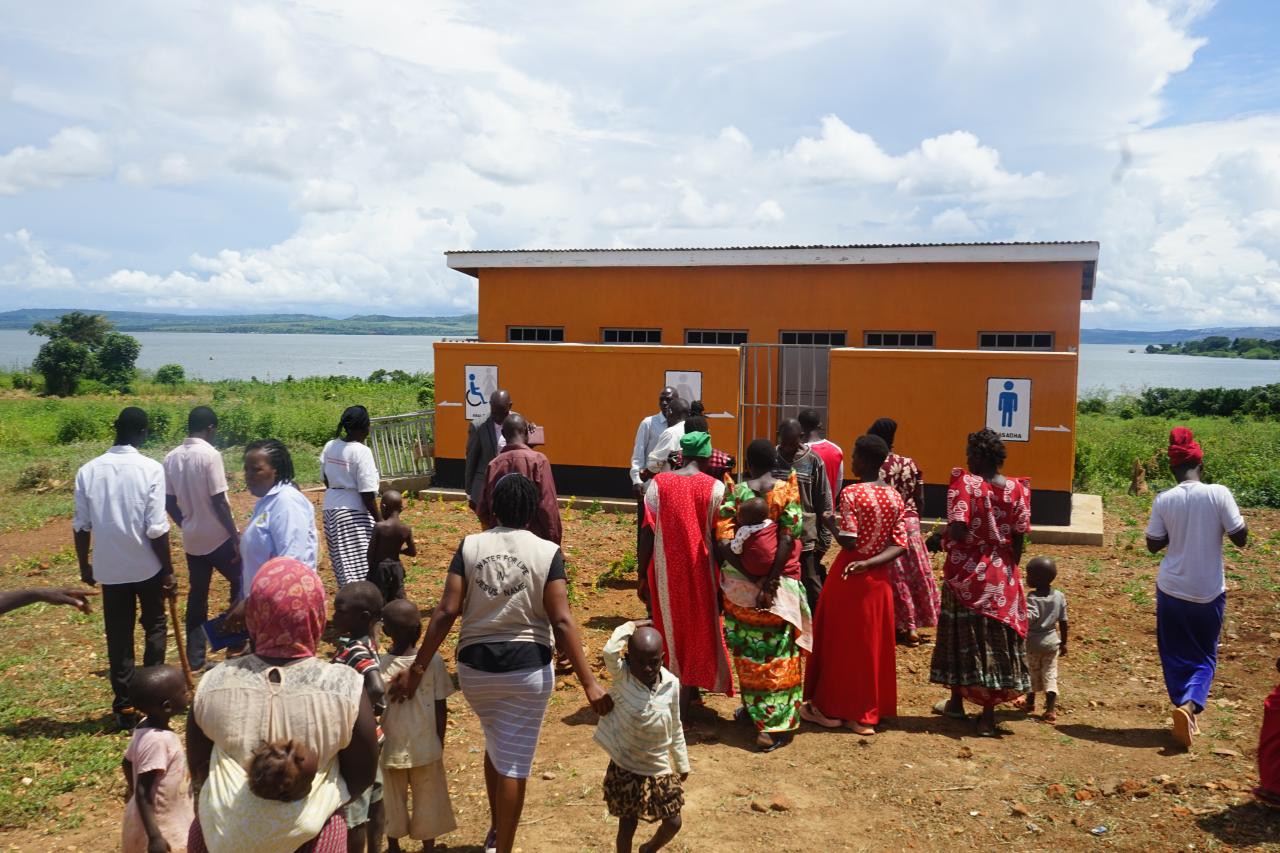
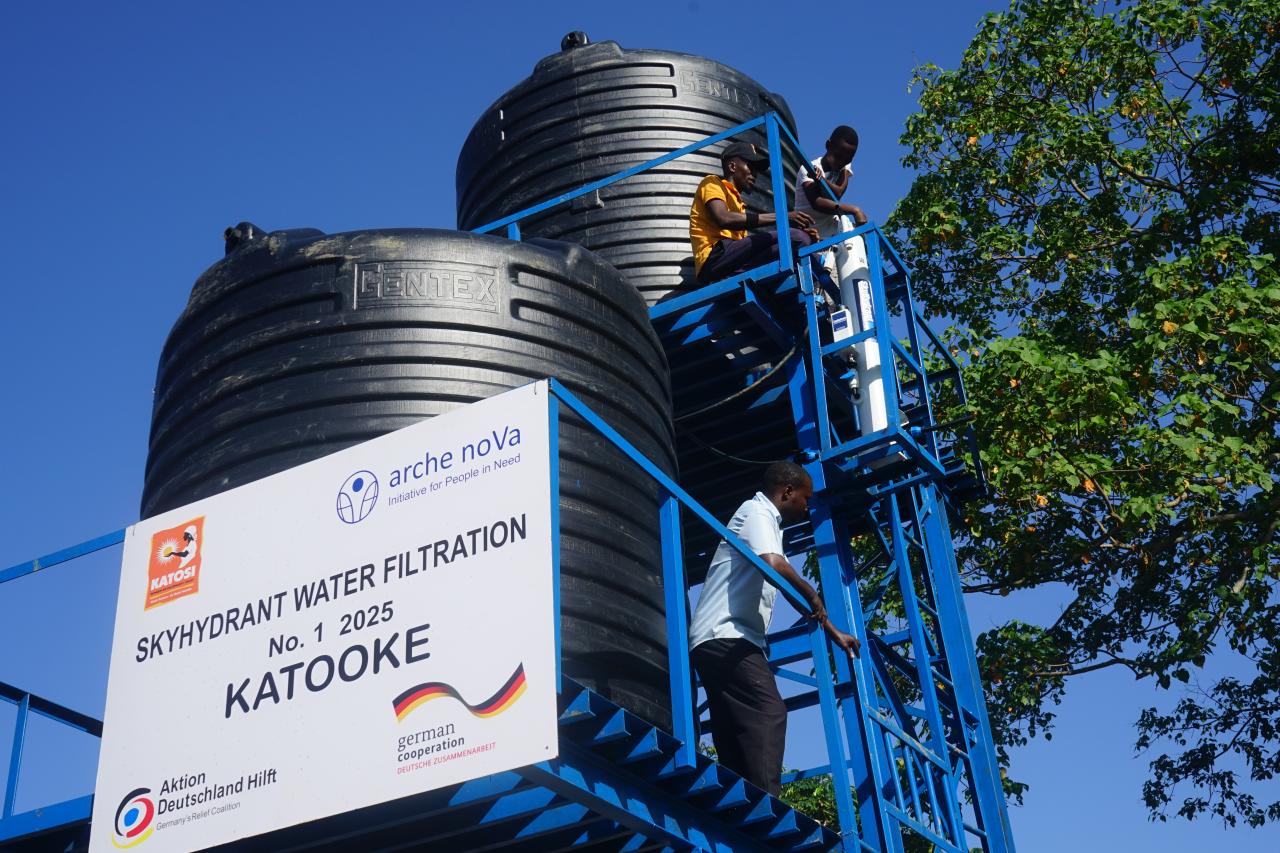

In addition to improving water and sanitation infrastructure, a total of 16 communities are receiving training on hygiene, schistosomiasis prevention and the new national framework for water management. Another focus is on human rights and gender equality: in discussions and training sessions, people address issues such as land conflicts, gender-based violence and discrimination. They work together to develop solutions and learn to assert their rights.
Promoting disaster preparedness
The communities on Lake Victoria are repeatedly threatened by the consequences of the climate crisis and flooding. That is why our local partner organisation KWDT is conducting participatory disaster risk assessments as part of our joint project, in which the people themselves identify the dangers to their community. The aim is to prevent or reduce damage to infrastructure, water supplies and buildings in the event of an emergency. At the meetings, participants raise wide-ranging issues that pose significant risks to them – from malaria and violence to accusations of witchcraft. Together, they discuss prevention measures, develop emergency plans and network with local authorities.
Opening up prospects for the future
To strengthen resilience in the communities and improve income, women's groups are provided with legal fishing equipment such as boats, nets and motors. Other groups receive cows, pigs or chickens to build alternative sources of income through livestock farming. Training in animal husbandry, marketing and health complements these measures.
Sustainability through personal responsibility
The project ends in March 2027, but the structures will remain in place. Water use committees, toilet management committees and disaster management committees will take responsibility for the infrastructure and continue the practices they have learned. The participants want the rules they have developed themselves to be binding.
That is why the most important points are written down and made public in the form of posters with names and photos. Regular review meetings promote exchange between the communities and enable them to learn from each other. The women, who are organised in self-help groups at KWDT, continue to organise training and monitoring in their villages. This strengthens the network, which extends beyond the project. The people of Lake Victoria are shaping their own future – with knowledge, resources and the certainty that their rights and dignity count.
Much already achieved in previous projects
Since 2014, arche nova, in cooperation with KWDT, has implemented projects in the area of water, sanitation and hygiene (WASH) in numerous rural communities directly on Lake Victoria and a little further inland. A particular highlight was the training of hand pump mechanics, who ensure that wells remain functional and that more than 150,000 people are supplied with drinking water.
Women of vigour
©arche noVa
Strong partnership
For over ten years, arche noVa has been working with the Katosi Women Development Trust (KWDT), a Ugandan NGO founded in 1996. KWDT is based on a network of women's self-help groups. The full-time and volunteer contributors have a thorough understanding of local conditions. Our partnership with KWDT is based on mutual respect, trust and joint decision-making. arche noVa contributes technical expertise – for example, in the installation of an ultrafiltration system or the construction of sanitary facilities. KWDT contributes local knowledge, cultural understanding and direct access to the communities. Together, we develop solutions that are sustainable and culturally appropriate. Local people are not seen as recipients of aid, but as active shapers of their own development.
Donate for this project
18
Material for the production of liquid soap
63
Construction of a biosand filter for a family
162
Solar panels and lighting for a municipal toilet
Project Overview
Objective
Improving the resilience and livelihoods of vulnerable fishing communities through a multi-sectoral approach with a focus on WASH
Target Group
- 9,850 people in 16 fishing villages (3,020 households)
- Focus: vulnerable fishing communities on Lake Victoria in the districts of Mukono and Buvuma
- Special focus on women, children and marginalised groups.
Activities
- Construction of water supply systems (borehole, ultrafiltration plant, spring water plant)
- Construction of latrines, washrooms and waste incinerators
- Training on WASH, hygiene and health prevention
- Training on human rights, gender and land conflicts
- Participatory disaster risk assessments and development of emergency plans
- Distribution of fishing equipment (boats, nets, motors)
- Distribution of animals (cows, pigs, chickens) for income diversification
- Training on animal husbandry, marketing and health
- Establishment and training of local committees (water, sanitation, disaster management, waste management)
- Development of educational materials on nutrition and health
Duration
October 2024 to March 2027
Co-operation partners
- Katosi Women Development Trust (KWDT)
- Local authorities and district governments in Mukono and Buvuma
- Women's groups and self-help groups in the 16 communities
- Uganda Water and Sanitation Network (UWASNET)
Donors
- Federal Ministry for Economic Cooperation and Development (BMZ)
- Private donors
Förderer